via http://www.tumblr.com/dashboard/37/9159806452
FFFFOUND! / EVERYONE
via Tumblr.



Popout
This great new video for Josh Ritter’s Love Is Making Its Way Back Home was directed by Erez Horovitz and involves the meticulous animation of over 12,000 laser-cut pieces of construction paper. Via Etsy:
A team of nearly twenty artists, editors, directors and product assistants ushered the video into being. The group started with storyboarding and computer animation before converting the digital graphics to paper cutouts (frame by frame), photographing those 12,000 cutouts and then stitching them together into four minutes of paper animation.
You can learn more about how it was done and see some great behind the scenes shots on Josh Ritter’s blog. (via etsy)
via Love Is Making Its Way Back Home: A Stop Motion Animation Using 12,000 Sheets of Construction Paper.

‘The Lun-class (harrier) ekranoplan was a seaplane used by the Soviet and Russian navies from 1987 to sometime in the late 1990s.

‘The 240-foot long Lun-class vessels were designed to skim just over the surface of the sea at up to 340-miles per-hour while carrying six, P-270 Moskit guided missiles meant to take out NATO ships.’
‘The only Lun completed is now sitting unused at a naval station in the town of Kaspiysk.’


…
Images 3-28 by Igor
Thank you to Defense Tech and Travel Centre
This capsule was curated by Roy Guill
 ’5 millenia old chariots and 12 horse skeletons were found in a tomb pit in the city of Luoyang in central China. Archaeologists believe the tomb was dug as part of the funeral rites of a minister or other nobleman during the Eastern Zhou dynasty period, about 2,500 years ago.’


…
Images 1-5: Zhang Xiaoli, Xinhua via Fame/Barcroft; 6: Imaginechina/AP
A couple years ago, I pointed to a 10-minute clip of a longer documentary called The Social Life of Small Urban Spaces. Some kind soul has put the whole thing up on YouTube:
Tags: architecture cities design NYC The Social Life of Small Urban Spaces video William WhyteThis witty and original film is about the open spaces of cities and why some of them work for people while others don't. Beginning at New York's Seagram Plaza, one of the most used open areas in the city, the film proceeds to analyze why this space is so popular and how other urban oases, both in New York and elsewhere, measure up. Based on direct observation of what people actually do, the film presents a remarkably engaging and informative tour of the urban landscape and looks at how it can be made more hospitable to those who live in it.


Michael Murphy’s solo show, LOOK, recently opened at gallery nine5 in New York. His artworks span a wide variety of media including multi-layered 3D sculptures, sound installations, and paintings with materials including nails, shadows, water, and sandblasted bullet-proof glass. Some of my favorite pieces are shown above, and you can see more in the show’s catalogue. Better yet, stop by gallery nine5 through October 6. (thnx, irina!)
tweet this | share on facebook | stumble it | see more items on colossal tagged with art, installation, Obama.


A lovely photo series of New York’s Williamsburg Bridge by Brooklyn-based photographer Mon Zamora.
tweet this | share on facebook | stumble it | see more items on colossal tagged with bridges, New York, photography.
What London Fashion Week proffered up two weeks ago wasn't just the normal strengths of print and colour play but truly a broad range of designers that went with their own flow and had conviction in that. Sure, the printists and texturists had a field day playing with surfaces but a breakout designer that shone amongst the pattern fest did it with a simple white shirt.
Well, actually seventeen mens and seventeen womens shirts to be exact. Palmer Harding may be a fresh name but Levi Palmer and Matthew Harding's combined experience in freelance work as well as their respective degrees in Central Saint Martins menswear BA and MA courses have created a steady footing for them to start their highly focused label. When I went to visit them out in the super outer regions of London (zone 6 anyone???), I found the level of focus to be scarily high for such young dudes. I had to applaud their pragmatism and sensible ways - they run their studio from Harding's family home (hence the non-E postcode), they've researched production options extensively so that they can take on orders (and I predict many will be buying into their core collection) and they have singularly honed in on what most consider to be a basic. Playing it safe or steady shouldered thinking? I'm going with the latter when you think of so many London young guns that have disappeared off the face of the earth leaving transient catwalk images from shows that probably burnt their budgets out.
Ultimately, what Palmer Harding are offering for S/S 12 is a desirable line of shirts, which have a stunning subtle point of difference that separates their shirts from the others. You could apply Magritte's words here and say "Ceci n'est pas une chemise blanche". Or you could go down the M&S route and go 'This isn't just ANY white shirt. This is a Palmer Harding white shirt." Inspired by photographer Ingar Krauss and 1930s couture detailing, Harding and Palmer employ various twists and turns to inject into the shirts creating wafts of volume, draping, pleating and metal fixtures that create the right shape as well as subtly referencing to Harding's MA collection. This is all a far cry from the bulbous shapes that I road tested when I bought a piece from Harding's challenging collaboration with Topshop but I love that there are still lingering references from that collection. Whilst mostly white, grey and a very very light shade of green are also used to prevent complete white-out. No detail is superfluous or just there for decoration.
For me, there's a quiet strength in Palmer Harding's work that got me really excited when I saw it in person. I can't quite put my finger on it but their approach seemed really refreshing and you feel somewhat assured that their debut will be a success. Hope my enthusiasm hasn't jinxed anything. Paris will be the real indicator as Palmer Harding take their collection to market this week.
Palmer Harding are already on the digital fast track with a film by the brilliant Malcolm Pate and styled by Love Magazine's Anders Sølvsten Thomsen...


Spotted these beautiful ink and watercolor birds by Abby Diamond on Society6. Available as fine art prints.
tweet this | share on facebook | stumble it | see more items on colossal tagged with art, birds, illustration.


I was floored to discover the work of UK artist Debbie Smyth who uses hundreds of needles and delicate lengths of thread to create wall-sized installations. Via her website:
Debbie Smyth is textile artist most identifiable by her statement thread drawings; these playful yet sophisticated contemporary artworks are created by stretching a network of threads between accurately plotted pins. Her work beautifully blurs the boundaries between fine art drawings and textile art, flat and 3D work, illustration and embroidery, literally lifting the drawn line off the page in a series of “pin and thread” drawings.
Incredibly beautiful work, I would love to see these up close. Here’s a video interview with Smyth as well as a timelapse of one of her most recent installations. (via joetta maue and rhumboogie)
tweet this | share on facebook | stumble it | see more items on colossal tagged with art, illustration, installation, needles, textiles.
 [Image: From Landform Building: Architecture's New Terrain, designed by Thumb Projects].
 [Image: From Landform Building: Architecture's New Terrain, designed by Thumb Projects].


 [Images: From Landform Building: Architecture's New Terrain, designed by Thumb Projects; see more].
 [Image: Landform Building launch at the BMW Guggenheim Lab].

Truman Capote
‘Irving Penn (1917 – 2009) was an American photographer known for his portraiture and fashion photography. He was among the first photographers to pose subjects against a simple grey or white backdrop. Expanding his austere studio surroundings, Penn constructed a set of upright angled backdrops, to form a stark, acute corner.’

Salvador Dali

Marlene Dietrich

Marcel Duchamp

Gypsy Rose Lee

Joe Louis

Georgia O'Keeffe

Mrs. William Rhinelander Stewart

Igor Stravinsky

Spencer Tracy

Duchess of Windsor

Ballet Society
…
Thank you to the Irving Penn foundation

THE SIMPSONS™
September 28, 1990
Mrs. Barbara Bush
The First Lady
The White House
1600 Pennsylvania Avenue
Washington, D.C.
Dear First Lady:
I recently read your criticism of my family. I was deeply hurt. Heaven knows we're far from perfect and, if truth be known, maybe just a wee bit short of normal; but as Dr. Seuss says, "a person is a person".
I try to teach my children Bart, Lisa, and even little Maggie, always to give somebody the benefit of the doubt and not talk badly about them, even if they're rich. It's hard to get them to understand this advice when the very First Lady in the country calls us not only dumb, but "the dumbest thing" she ever saw. Ma'am, if we're the dumbest thing you ever saw, Washington must be a good deal different than what they teach me at the current events group at the church.
I always believed in my heart that we had a great deal in common. Each of us living our lives to serve an exceptional man. I hope there is some way out of this controversy. I thought, perhaps, it would be a good start to just speak my mind.
With great respect,
(Signed)
Marge Simpson
Dear Marge,
How kind of you to write. I'm glad you spoke your mind; I foolishly didn't know you had one.
I am looking at a picture of you, depicted on a plastic cup, with your blue hair filled with pink birds peeking out all over. Evidently, you and your charming family — Lisa, Homer, Bart and Maggie — are camping out. It is a nice family scene. Clearly you are setting a good example for the rest of the country.
Please forgive a loose tongue.
Warmly,
Barbara Bush
P.S. Homer looks like a handsome fella!


As perhaps a companion piece to last week’s skull nickels, here’s yet another thing I had no idea existed. Apparently in several wooded areas around the UK, passersby have been stopping for decades (if not centuries), meticulously hammering small denomination coins intro trees. Most of the trees seem to be in and around Cumbria and Portmeirion, and I didn’t find a single example of a tree like this located outside the UK. According to this recent article by the BBC, the practice might date back to the early 1700s in Scotland where ill people stuck florins into trees with the idea that the tree would take away their sickness. The practice seems akin to love padlocks or Americans collaborative effort of sticking their nasty ass gum all over everything. (photos courtesy shaun whiteman, drew, ken werwerka, rachel bibby, paul moriss, ministry, donald mcdougal, heartbeeps, via lustik and hrtbps)
tweet this | share on facebook | stumble it | see more items on colossal tagged with currency, plants, trees.
 [Image: Photo by Simon Norfolk, from Burke + Norfolk: Photographs from the War in Afghanistan].
 [Image: Photo by Simon Norfolk, from Burke + Norfolk: Photographs from the War in Afghanistan].
In October 2010, Simon Norfolk began a series of new photographs in Afghanistan, which takes its cue from the work of nineteenth-century British photographer John Burke. Norfolk’s photographs reimagine or respond to Burke’s Afghan war scenes in the context of the contemporary conflict. Conceived as a collaborative project with Burke across time, this new body of work is presented alongside Burke’s original portfolios.We will take a look not only at the resulting photographs—a selection of which appear here—but at the often overlapping responsibilities of the photojournalist and the artist in documenting political events in conflict zones around the world.
 [Image: Photo by Simon Norfolk, from Burke + Norfolk: Photographs from the War in Afghanistan].


 [Images: Photos by Simon Norfolk, from Burke + Norfolk: Photographs from the War in Afghanistan].
 [Images: Photos by Simon Norfolk, from Burke + Norfolk: Photographs from the War in Afghanistan].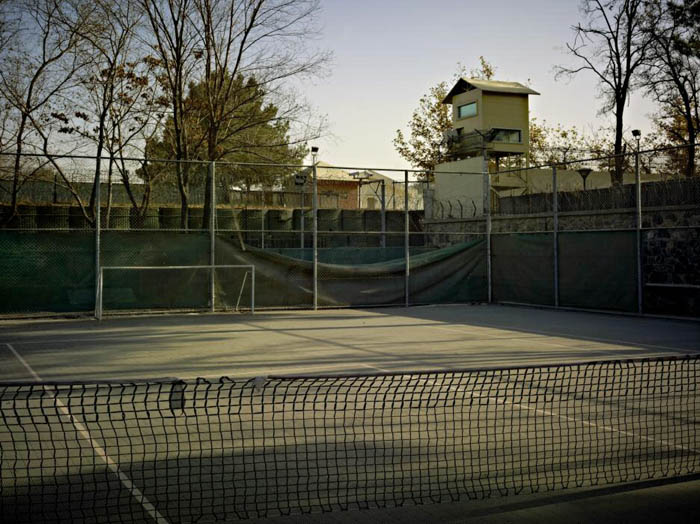


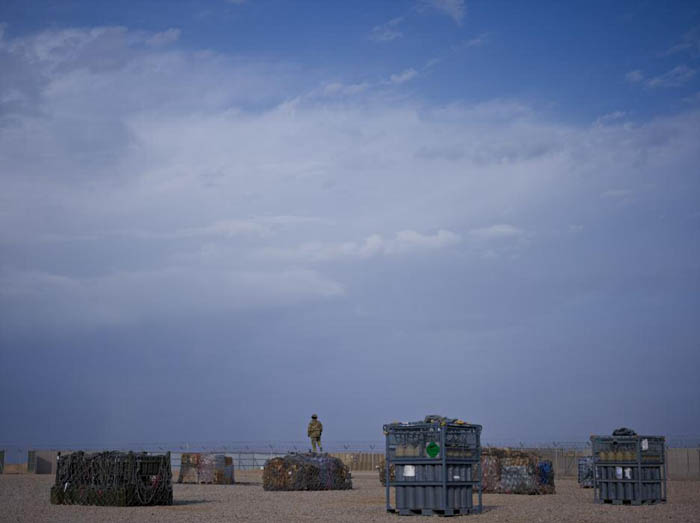


 [Images: Photos by Simon Norfolk, from Burke + Norfolk: Photographs from the War in Afghanistan].
 [Image: Photo by John Burke, from Burke + Norfolk: Photographs from the War in Afghanistan by Simon Norfolk].


 [Images: Photos by Simon Norfolk, from Burke + Norfolk: Photographs from the War in Afghanistan].
 [Image: Photo by Simon Norfolk, from Burke + Norfolk: Photographs from the War in Afghanistan].
All of the work that I’ve been doing over the last five years is about warfare and the way war makes the world we live in. War shapes and designs our society. The landscapes that I look at are created by warfare and conflict. This is particularly true in Europe. I went to the city of Cologne, for instance, and the city of Cologne was built by Charlemagne—but Cologne has the shape that it does today because of the abilities and non-abilities of a Lancaster Bomber. It comes from what a Lancaster can do and what a Lancaster can't do. What it cannot do is fly deep into Germany in the middle of the day and pinpoint-bomb a ball bearing factory. What it can do is fly to places that are quite near to England, that are five miles across, on a bend in the river, under moonlight, and then hit them with large amounts of H.E.. And if you do that, you end up with a city that looks like Cologne—the way the city's shaped.I hope to see you at 6:30pm on Tuesday, September 13th.
So I started off in Afghanistan photographing literal battlefields—but I'm trying to stretch that idea of what a battlefield is. Because all the interesting money now—the new money, the exciting stuff—is about entirely new realms of warfare: inside cyberspace, inside parts of the electromagnetic spectrum. Eavesdropping, intelligence, satellite warfare, imaging—this is where all the exciting stuff is going to happen in twenty years' time. So I wanted to stretch that idea of what a battleground could be. What is a landscape—a surface, an environment, a space—created by warfare?
 [Image: Photo by Simon Norfolk, from Burke + Norfolk: Photographs from the War in Afghanistan].


Frances Bean Cobain has done a pretty good job staying out of the spotlight, but now that’s she’s all grown up — goth, inked, and gorgeous — we may be seeing more of her. The child of Kurt Cobain and Courtney Love (who lost custody of her two years ago) turns 19 this month, and has been pursuing visual art and the occasional music project in addition to modeling. (Remember, Ryan Adams stole her trust fund so you may wanna buy some of her work.) Frances recently posed for these artistically grungy B&W photos by Hedi Slimane; take a look, it’ll make you feel old.

Made of laser-cut silk pieces, these delicate objects are brought together by string, taking their shapes from nature.
Sivan Royz is a textile designer from Israel whose latest project, Blooming Structures, is a beautiful series of textile sculpture that also double as jewelry and accessories.
The white objects are small purses or pouches to hold an iPhone or a lipstick. The colored objects are a neck piece and a bracelet, which react to the body’s movements.


 ‘I came across this set of photos – not a restored bike, but a ’brand new’ 1949 Claud Butler built from a cache of original, unused parts found by Jim Cunningham, ‘Founder, President and Chief Flunky Officer of CyclArt.‘ It’s a beauty, isn’t it?’
- Rich Johnson


Youngstown Steel Mill 1953


(click images for detail)


Remember as a child, plopped down in a sandbox with a few trucks and a shovel, when you suddenly struck on the brilliant idea of digging straight down through the Earth, all the way to China? What would you find there? Berlin-based firm Topotek1 keeps that dream alive with their latest installation for the 2011 Xi’an International Horticultural Exposition. The Big Dig is a an enormous hole that simulates an audio connection with Sweden, Argentina, the United States and Germany. While standing at the edge “soundtracks of the life on the other side: cows from the pampas of Argentinas, commuters rushing among transit through New York City, the maritime life of Stockholm, and layers of history so audible among the streets of Berlin. These soundtracks pique the imagination of the visitors, transferring them away from China, away from the garden.” A glass barrier prevents exposition visitors from “becoming too curious” however it would be amazing to see the space with an unobstructed view and imagine sliding down the sloping green surface and finding yourself on the other end. Images by Geng Weng courtesy Topotek1. (via pruned)
tweet this | share on facebook | stumble it | see more items on colossal tagged with art, gardening, installation.


Greek artist Vally Nomidou creates these delicate life-size sculptures of women and girls using paper and cardboard. Via the exhibition page:
Paper, Nomidou’s dominant material, now becomes a key component in her creative process, inextricably linked to painful and systematic research on the technical level, as well as on that of aesthetic integration. The artist respects her material and, although it is cheap and vulnerable, she does not “adulterate” it by using other materials. Moreover, she does not use it as a shell, an encasing to cover a necessary inner structure by providing a fake, idealised skin. Nomidou builds and shapes her works from the inside out solely using paper and paperboard. The internal cardboard frame is built with a vertical and horizontal grid in order to be able to support and render stillness in her sculptures, while also ensuring balance in contraction and expansion.
To me her sculptures appear to be three dimensional collages, the paper-based media mixing and intertwining, occasionally embedded with flowers, jewelry and other materials. Yet somehow they retain incredibly life-like forms, perfectly proportioned. See more from this series entitled “Let it Bleed“. (via acidolatte)
tweet this | share on facebook | stumble it | see more items on colossal tagged with art, paper, sculpture.
 [Image: A still from Convento].
Hundreds of years ago, donkeys were essential creatures for farming. The donkey had to be blindfolded, and it walked in a circle for 12 hours a day, pulling up water from a 15-meter-deep well, probably exhausted from heat. It's incredible that Christiaan was able to understand the sensitivity and the history and create a mechanical animal that made reference to the importance of the animal, and create an artwork at the same time. It's more about the animals than it is about robots.Zwanikken himself elaborates on how these creatures are made:
I like the idea of recycling, so I collect a lot of materials from dumps. But the crucial parts—motors, gears and bearings—I try to buy new so they can be easily replaced. I use servo motors, hydraulics, pneumatics, stepper motors, electromagnetic devices, propellers, water pumps, combustion engines—basically anything that can be used to create movement. To control them, I use microcontrollers, tons of basic stamps, animatronic software, PCs, remote control and custom-built electronics. I salvage a lot of electronic parts from other machines. Most of the creations are stand-alone and have their own little brain that I program. The more complex pieces are interactive and have motion sensors, radar or ultrasonic sensors.They are part of what Popular Science calls, in an unrelated context, a "new robotic phylogenesis."
 [Image: From Specimens of Unnatural History by Liam Young].


New York design firm Design Office Takebayashi Scroggin (D.O.T.S.) created this Massimal for the 2011 Beaux Arts Festival using 20,000 standard white zip ties. Wait, “massimal”? The firm describes a massimal as “design objects that serve as prototypes to examine how physical form can engage the public realm. These constructs are mass abstractions of animal forms fabricated in systematic fashion from one material.” So there you go. The zip ties are meticulously interlinked creating a complex outer mesh that is then suspended in place using cables. Photos by GLINTstudios. (via designboom)
tweet this | share on facebook | stumble it | see more items on colossal tagged with animals, art, installation.


I’m loving the symmetry created in these mirror photographs of urban China by Austrian designer and photographer Atelier Olschinsky. See the entire series here, and his recently published illustrations entitled Game Zone are pretty mind-blowing as well.
tweet this | share on facebook | stumble it | see more items on colossal tagged with China, photography.

The (mostly) aerial photography of Stephan Zirwes is a thing of great beauty. Scale, pattern, grids, colour, texture and drama – his work covers it all. If you like this, you might also want to check out the work of Alex Maclean (who is long overdue another mention)


UK artist and designer Kyle Bean (previously here and here) has created these lovely pencil shaving portraits for contributors to the Wallpaper Handmade issue. Everything this guy does turns to awesome.
tweet this | share on facebook | stumble it | see more items on colossal tagged with design, illustration, pencils.


Heatwaves are good for cool deals on new duds…or at least some A/C. Luckily, we have both!
Come by our sample sale this week – starts tomorrow at 10AM.
w/ our friends Hyden Yoo, Rogan, Shae, and 80%20.
Everything is 60-90% off !! Hope to see you here !!!
DESIGNERS
GAR—DE
HYDEN YOO
ROGAN
SHAE
80%20
DATES/HOURS
WED 7/13 – 10AM to 7PM
THU 7/14 – 10AM to 7PM
FRI 7/15 – 10AM to 7PM
SAT 7/16 – 10AM to 5PM
LOCATION
135 W 36TH ST – 14TH FLOOR (b/t Broadway + 7th Ave)
NEW YORK NY 10018

Every Leica lens is hand-crafted and goes through meticulous manufacturing processes to uphold the quality and precision that Leica defines and customers have come to expect. In the age where technology almost inevitably means mass manufacturing, Leica products are still made with exacting precision by the hands of highly-trained technicians.
This video gives you a behind-the-scenes look at the craftsmanship and making of Leica lenses in the production facilities of Leica Camera AG. [...]
That's why there is a 6 months to one year wait, for example, on some of their lenses.
'FORMAT' Esther Perbandt S/S 2012; designed by Esther Perbandt. Directed by Cristian Straub. [...]
Models: Adrian Bleschke & Beatrix Falke.